
Plotwist: Short Drama & Series
ManhNheEntertainment
0.00.00 Reviews
- Version
- 1.0.3
- Installs
- 100.00K
- Age Rating
- Everyone
Screenshots
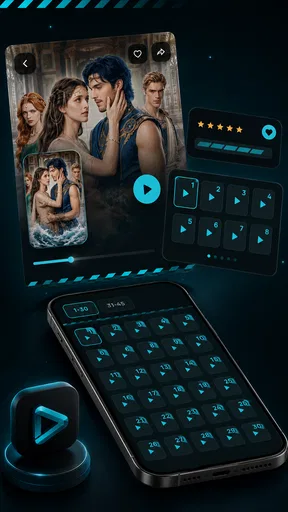
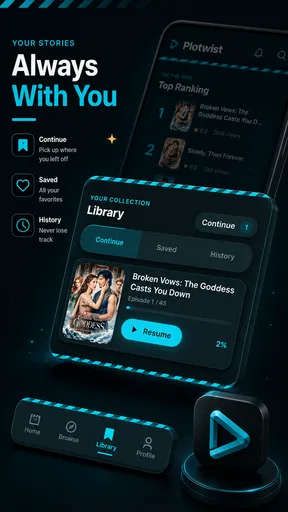
Our Review of Plotwist: Short Drama & Series
 Analysis by Appyee
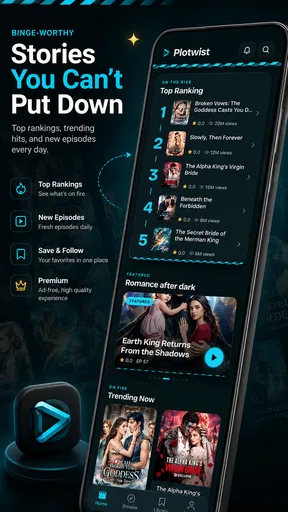
I tried Plotwist: Short Drama & Series as the kind of entertainment app you open when you have only a few minutes and want a story to start immediately. Its focus is vertical short dramas, with episodes built around sharp turns in romance, CEO, mafia, and revenge plots. That format makes it easy to watch one scene while waiting for a bus or taking a short break, but it also creates a very particular relationship with your internet connection: the experience depends on how quickly each piece of video can reach your phone.
What I like most is that the app understands the difference between watching a full-length show and following a compact serial. You do not need to reserve an entire evening for it. You can drop in, catch a dramatic exchange, and leave with a reason to return. At the same time, the constant rhythm of twists is not for everyone. If you prefer slow character development, carefully built mysteries, or long episodes with room to breathe, this will feel more like a stream of cliffhangers than a traditional series.
How Plotwist feels when the connection is doing the heavy lifting
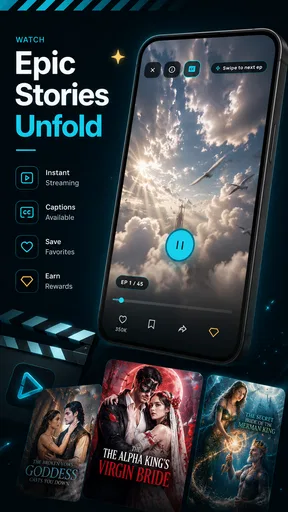
The vertical presentation is clearly designed for a phone held upright. That matters because it removes the small adjustment I usually make when moving between a regular video service and a mobile screen. I can watch without turning the device sideways, and the short-drama format suits one-handed viewing better than a long film. The trade-off is that the screen feels more intimate but less suited to sharing with someone else. This is a personal viewing app, not the choice I would make for a group movie night.
In my experience, the first important question is not whether the stories are interesting; it is whether the network can keep pace with the viewing session. A weak or changing connection can interrupt the momentum of a short episode more noticeably than it would during a casual long video. When an episode is brief, even a pause feels like a large part of the experience. A dramatic reveal loses some of its effect if I am staring at a loading moment instead of seeing the reaction that follows.
That makes a stable connection especially valuable during the most important scenes. If I am on reliable home Wi-Fi, the app feels direct and convenient. I can move from one episode to the next without treating every transition as a technical event. On mobile data, the experience depends more on signal quality and my own data allowance. I would not begin a long run of episodes in a place where the connection regularly drops unless I was comfortable with interruptions.
The app’s appeal comes from its speed, but speed also makes connectivity problems more visible. A longer show may give a viewer time to settle in after a brief delay. Here, the story is constantly trying to push forward. The best use is therefore a connected setting where I can give the drama my attention for a short stretch rather than a location where I am repeatedly moving between strong and weak coverage.
Why the mobile format works in ordinary daily situations
A realistic use case is a commute with several short pauses rather than one uninterrupted journey. I might open the app while waiting for an appointment, watch part of a storyline, lock the phone when my name is called, and return later when I have another free moment. That pattern suits short dramas better than a conventional television service, where stopping after a few minutes can feel awkward. Plotwist turns those fragments of time into a natural viewing window.
The same design can work during a lunch break, but I would be selective about how I use it. If the break is unpredictable, starting an episode with a strong cliffhanger may leave me wanting more just as I need to return to work. The app is good at creating momentum, so it is worth treating it as a deliberate break activity rather than something I open without considering the time available.
One useful habit is to check the strength of your connection before beginning a sequence. I do not mean obsessively testing it; simply noticing whether other online content is loading normally can prevent a frustrating session. If the signal is unstable, I would choose a shorter visit, avoid watching in a crowded network environment, or wait until I am somewhere more dependable. That small decision protects the central appeal of the app: quick entertainment without unnecessary friction.
The upright format also changes how I hold my attention. Because the screen occupies less horizontal space, I find it easier to watch discreetly in public, but that convenience can encourage distracted viewing. The stories are built to catch the eye quickly, and the succession of reversals makes it tempting to continue longer than planned. I recommend deciding in advance whether you have time for one episode or a longer session, especially when using mobile data.
What happens when an episode is interrupted
Connectivity failures are most annoying when they arrive at a turning point. A short drama often builds toward a reveal, confrontation, or sudden change in relationships. If playback stops just before that moment, the interruption feels more severe than a pause during a quiet conversation. I found that the sensible response is to avoid repeatedly tapping the screen in frustration. When the network is fluctuating, giving the connection a moment to recover is usually less stressful than restarting the same action again and again.
I also prefer to treat a failed transition as a sign to change context. Moving from a weak mobile signal to a more stable Wi-Fi connection, or simply waiting until the network settles, is more practical than blaming the story for a technical delay. The app’s compact structure makes it easy to return later, but the emotional continuity still depends on remembering where I stopped. For that reason, I pay attention to the last scene before closing the app rather than exiting in the middle of a loading moment.
Another limitation is the lack of certainty that comes with any connection-dependent viewing routine. I would not rely on this app as my only entertainment plan for a flight, a remote trip, or a place where coverage is unpredictable. The important distinction is not that the app is unsuitable for travel in every situation; it is that I would want a dependable connection before making it part of that plan. For a viewer who expects every show to be available regardless of signal, that uncertainty may be a deal-breaker.
When everything works again, the short-episode structure helps recovery because I do not have to reconstruct a complicated hour-long plot. The immediate emotional situation is usually easy to recognize: a romance has shifted, a powerful character has made a demand, or revenge has changed direction. That simplicity is a strength for interrupted mobile viewing. It does not remove the annoyance of a failed connection, but it makes returning less demanding than rejoining a dense serialized drama.
Using it without letting mobile data disappear unnoticed
Video is naturally more demanding than text, and a vertical feed can make consumption feel deceptively light because each individual episode is short. I would not assume that a quick opening equals negligible data use. If I am away from Wi-Fi, I keep the session intentional and avoid leaving the app running while doing something else. A short-drama service is easy to open casually, but several consecutive episodes can turn a few spare minutes into a much larger viewing session.
My practical approach is to use Wi-Fi for discovery and longer catch-up sessions whenever possible. Mobile data is better reserved for a small number of episodes when I already know I have time to watch them. This is also useful for battery awareness: a bright screen, active video playback, and a changing network can be a less comfortable combination than a short text-based break. I would carry a charger or choose a shorter session if my phone is already low.
Another tip is to avoid judging the app by a single poor session in a crowded public network. The problem may be the environment rather than the storytelling or the app’s basic concept. Conversely, I would not ignore repeated buffering simply because the episodes are entertaining. If the same issue happens on a dependable connection, it becomes part of the app’s practical quality for that particular phone and location, and I would consider whether another entertainment service gives me a smoother routine.
The cost position is straightforward: Plotwist is free to use, which lowers the barrier to trying its short dramas. That does not automatically make it the best option for every viewer. A free app can still cost attention, data, battery, and patience. I think of those as the real trade-offs here. If the format keeps me engaged during otherwise empty moments, the exchange feels worthwhile. If I spend more time waiting for playback or managing connectivity than watching, the convenience disappears.
Who will enjoy the stories, and who should look elsewhere
I would recommend it to viewers who enjoy compact melodrama and want immediate conflict. The combination of romance, CEO power dynamics, mafia tension, and revenge gives the app a clear emotional direction. It is suited to someone who likes stories that announce their stakes quickly and keep changing the situation. It may also appeal to people who find traditional episodes too long for their schedule but still want an ongoing narrative rather than isolated clips.
I would be more cautious recommending it to someone who wants a quiet, realistic drama. The premise is built around twists, so subtle pacing is not the main attraction. Viewers who dislike cliffhangers may also feel manipulated by the structure, especially if they prefer to finish a complete story in one sitting. In that case, a conventional streaming service with full-length episodes would probably be a better match, even if it requires more time and a wider screen.
It is also not my first choice for children simply because the content rating is Everyone does not tell me whether every theme will suit every family’s preferences. The presence of mafia and revenge themes may be acceptable to some households and less comfortable for others. I would preview the style myself before handing the phone to a younger viewer, particularly if the device is being used without supervision.
For people who mainly listen to entertainment while commuting, this is not an obvious replacement for podcasts or audio series. The storytelling is visual, and the vertical format expects the screen to remain part of the experience. Likewise, someone seeking a large catalog of established long-form television may be happier with a familiar streaming platform. Plotwist is more focused: its value comes from quick, visually presented serial drama rather than breadth across every kind of entertainment.
Small habits that make the experience better
I found three habits especially useful. First, I start with a stable connection when I want to judge a storyline fairly. That separates a weak network from the actual viewing experience. Second, I use the app in planned windows instead of opening it whenever I am bored, because the cliffhanger design can easily extend a short break. Third, I stop at the end of an episode whenever possible, which makes it easier to return after an interruption and reduces the chance of leaving playback active while I am no longer watching.
A fourth habit is to choose the right setting for the type of attention the app demands. In a loud public place, I may miss dialogue or emotional details even if the video loads perfectly. The vertical screen is convenient, but it does not make the story immune to distractions. Headphones can help in appropriate situations, while a quiet room is better if I want to follow the relationship changes rather than simply sample the most dramatic moments.
I also recommend giving the app a fair trial across more than one context. A few minutes on home Wi-Fi tells me whether the format interests me. A short mobile-data session tells me whether it fits my routine. Returning after an interruption shows whether I can easily pick up the story again. Those are more useful tests than judging it only by the first dramatic scene, because the real question is whether the app remains convenient in the places where I actually plan to use it.
Practical details before installing
Plotwist is an entertainment app from ManhNhe, and it is free. It has passed the 100K-install mark, which suggests that the short-drama idea has found an audience without making the app feel like a niche experiment. The current release is version 1.0.3, and it can run on Android 7.0 or later. That makes it accessible to people using older supported Android phones, although the quality of any video session will still depend on the device, connection, and available battery.
The age classification is Everyone, but I would still make a personal decision based on the themes that attract you or your family. Romance, power struggles, mafia situations, and revenge can carry a more intense tone than the simple word “entertainment” suggests. The classification is useful as a general guide, not a substitute for deciding whether this particular style of drama is appropriate for the person watching.
Because the app is free, trying it does not require a subscription decision. That makes it easier to test the vertical format and see whether the network demands fit your routine. I would begin on Wi-Fi, watch a few episodes, and then decide whether it deserves a regular place in my mobile entertainment rotation. If the connection causes frequent interruptions even in my usual locations, I would not keep forcing the habit just because the episodes are short.
My connectivity verdict
Plotwist works best when I treat it as connected, on-the-go entertainment rather than a complete replacement for a traditional streaming library. Its vertical short dramas are convenient, its themes are immediately recognizable, and its twist-heavy structure gives a spare moment a clear shape. The app is particularly effective for waiting rooms, brief commutes, and short breaks where a full episode of a conventional series would be inconvenient.
The main weakness is equally clear: the shorter and more dramatic the episode, the more noticeable a network interruption becomes. I would use Wi-Fi for longer sessions, watch mobile-data consumption, and avoid depending on it in places where coverage is unreliable. Those are not complicated precautions, but they make a meaningful difference to whether the experience feels smooth or irritating.
My final recommendation is positive for viewers who want fast romance and revenge stories in a phone-friendly format. I would skip it if I need offline certainty, quiet realism, audio-first entertainment, or long-form television. For the right viewer, Plotwist: Short Drama & Series is an easy app to sample and a useful way to fill small gaps in the day. Its best feature is not simply that episodes are short; it is that the format respects fragmented mobile time, provided the connection can keep up.
Verdict
Strengths of Plotwist: Short Drama & Series
- Short episodes are easy to watch during quick breaks.
- The vertical format works well for one-handed mobile viewing.
- Storylines are designed to deliver frequent twists and cliffhangers.
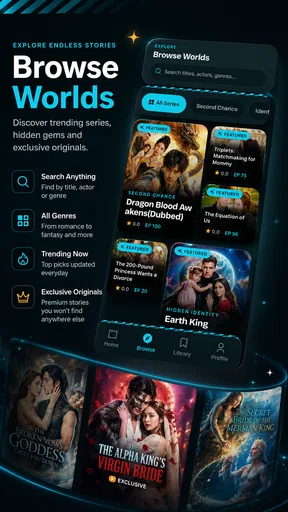
- A broad selection of romance and drama series is available.
- Personalized recommendations help surface similar shows quickly.
Limitations of Plotwist: Short Drama & Series
- Many episodes require coins or premium access to continue.
- Frequent ads can interrupt viewing, especially for free users.
- Some plots rely on predictable tropes and repetitive conflicts.
- Video quality and loading speed may vary with network conditions.
- Subscription costs can add up for viewers following several series.
Similar Picks in This Category
View All
Google Play Games
Google LLC3.9

Netflix
Netflix, Inc.4.8

YouTube Kids
Google LLC4.2

Disney+
Disney4.4

Prime Video
Amazon Mobile LLC4.7

Steam
Valve Corporation3.2
Frequently Asked Questions
What is Plotwist: Short Drama & Series?
Plotwist: Short Drama & Series is a mobile entertainment app focused on short-form fictional content. It offers bite-sized drama episodes designed for viewing on a phone, making it convenient when you only have a few minutes available. The catalog may include romance, suspense, family conflicts, and other popular dramatic themes, with stories generally divided into multiple short episodes.
Is Plotwist: Short Drama & Series free to download and use?
The app can generally be downloaded without an upfront purchase, but access to all content may depend on the platform’s monetization system. Some episodes or features can be available for free, while additional viewing may require watching advertisements, using in-app currency, subscribing, or making individual purchases. Before spending money, check the current pricing, renewal terms, and available payment options in the app store.
Does Plotwist require an internet connection?
Plotwist is primarily designed for online streaming, so an active internet connection is usually needed to load the catalog and play episodes. Streaming over mobile data can consume a considerable amount depending on video quality and viewing time. If the app provides downloads for offline viewing, availability may vary by title, account type, region, or subscription, so users should confirm this inside the app.
Is Plotwist: Short Drama & Series suitable for children?
Parents should review the app’s age rating and individual story descriptions before allowing children to use it. Short drama platforms can include mature relationship themes, emotional conflict, suggestive situations, violence, or language that may not be appropriate for younger viewers. Because content and ratings can change as new series are added, parental supervision and device-level purchase restrictions are recommended.
What should I know about subscriptions and in-app purchases?
Some Plotwist content may be supported by in-app purchases, virtual coins, advertisements, or recurring subscriptions. Carefully read the purchase screen before confirming, especially to determine whether a payment is one-time or automatically renewing. Subscriptions are normally managed through Google Play or the Apple App Store, and deleting the app does not necessarily cancel an active subscription; cancellation must be completed through the relevant store settings.
